Causes of Chronic Vessel Injury
- High blood pressure
- Smoking
- High cholesterol
- Poor diet
- Lack of exercise
- Obesity
- Environmental causes — pollution
- Elevated blood sugar including prediabetes and diabetes
- Genetics resulting in abnormal lipid levels
A comprehensive look at heart disease — understanding it, recognizing its causes, preventing it, and detecting it early.
The Science
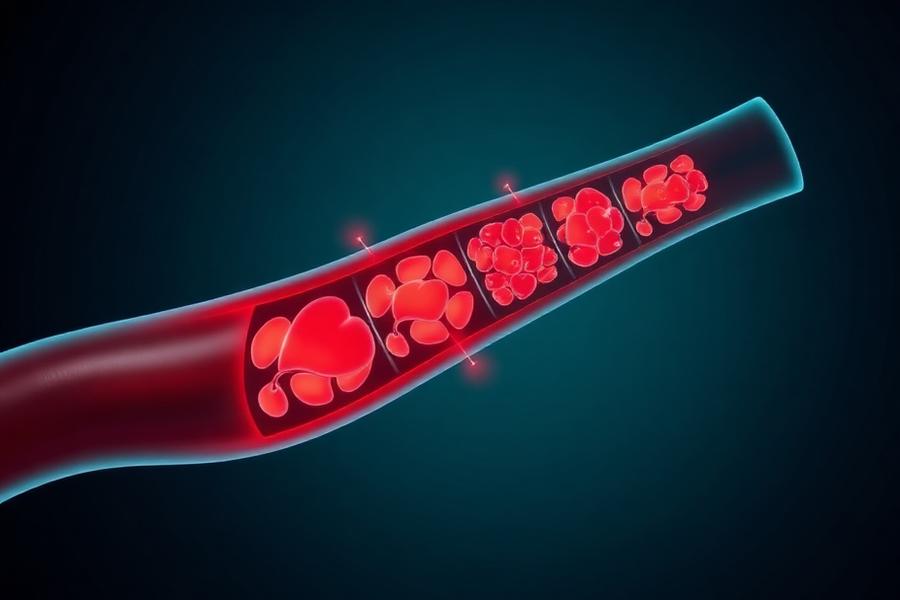
The development of atherosclerosis — or "Hardening of the Arteries" — is a lifelong process that occurs in response to injury to the blood vessel wall, leading to the accumulation of lipids and scarring. Initially the accumulation occurs on the outside of the blood vessel so that blood flow is not impeded; however, through recurrent episodes of injury, inflammation and healing, the accumulation eventually grows into the blood vessel and results in slowing of blood flow.
Typically, a blood vessel needs to be 70% blocked before a person begins to develop chest pain with walking or exercise.
As the blood vessels become inflamed, the blockage can become what is known as vulnerable. A vulnerable blockage can break open, allowing blood to be exposed to the tissue inside the blood vessel — resulting in a clot that blocks blood flow. This is what causes a heart attack. For this reason, a heart attack is often not a blockage that grows to 100% over time; rather, it is frequently a 10, 20 or 30% blockage that suddenly breaks open.
This is why diseases that cause recurrent inflammation — like respiratory viruses (influenza, COVID), arthritis, or chronic inflammatory diseases like psoriasis and inflammatory bowel disease — are associated with an increased risk of having a heart attack.
Risk Factors
Atherosclerosis starts with recurrent injury of our blood vessels that leads to cholesterol deposition and scarring over many cycles of injury and healing. The deposited lipids become oxidized and toxic to surrounding tissue.
Inflammation and clotting at the site of fatty atherosclerotic lesions increases the risk of a heart attack:
Prevention
For patients with no evidence of heart disease, the goal is true prevention — preventing "hardening of the arteries." The focus is on lifestyle: keeping active, eating the right foods, and minimizing weight gain.
The goal for activity is twofold. Cardio workouts such as running, biking, and swimming are critically important to maintaining cardio-pulmonary function, endurance, and general health. They are also a good way to burn calories and keep weight off.
Resistance training — weight training, pushups, pullups, swimming, and yoga — builds muscle. Muscle tissue is how we optimally manage our blood sugar and insulin levels. It also strengthens our core muscles which enhances our health span as we age.
Maintaining and building muscle is an optimal approach to minimizing cardiometabolic disease now and as we age.
In a society with such easy access to food, eating should be divided into two topics: what we eat and how we eat. The number of calories consumed is important, but equally important is the quality of the food — specifically to what extent and how rapidly it induces insulin release.
For example, raw oats are a superfood packed with fiber and nutrients, with a low glycemic index. Instant oats, due to processing, have lower fiber content, higher glycemic index, and often include sugar-based flavor packets that worsen the nutritional benefits. By the same logic, raw vegetables with complex carbohydrates are healthier than heavily cooked ones where fibers have broken down.

How we eat can be as important as what we eat. We did not evolve during a time when we had easy access to food. Our body is extremely efficient at storing energy from meals, regulated largely by insulin release. The liver is the only organ that stores sugar as glycogen and releases it when needed.
When the liver is already full of glycogen, all the sugar from a meal goes into the bloodstream and is taken up by fat and muscle. This is why intermittent fasting works — it gives the body time to empty the liver. Why does more muscle mass help? Greater metabolic rate uses more insulin, limiting fat uptake. Why is regular movement important? It mobilizes glycogen in the liver.
Key Insight: The combination of food on one's plate determines the overall effect. A 500-calorie steak with a sugared soda may seem better than a 1,000-calorie steak with water — but the rapid insulin release from the soda significantly alters how the meal is digested. Moderating red meat intake is also an important part of any heart disease prevention strategy.
Early Detection
Detection of heart disease involves two critical dimensions: assessing your risk of developing heart disease and identifying the presence of existing heart disease.
For patients who already have evidence of heart disease — such as a prior stent, bypass, or heart attack — or for diabetics without a history of heart disease, the lifestyle habits discussed above remain relevant, but additional medical therapy and diagnostic testing are necessary to ensure prevention is maximally effective.
The FHA's dual approach combines biomarker testing (biological assessment) with CT Angiography (anatomical assessment) to create a complete picture of cardiovascular health and catch disease before it becomes dangerous.